 English

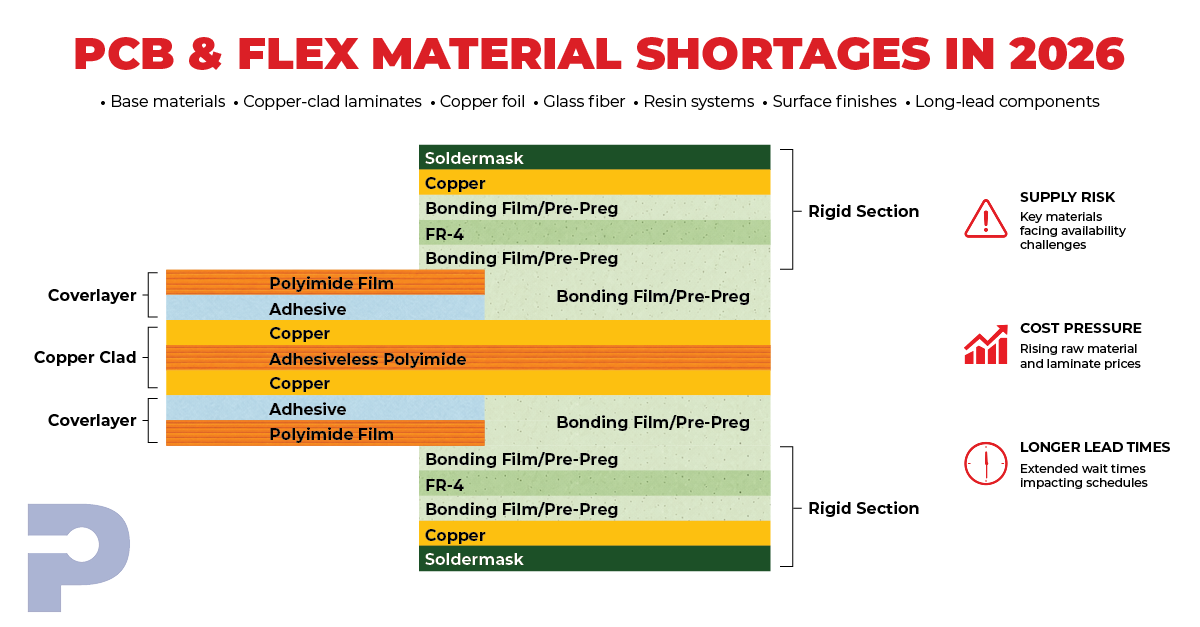
PCB sourcing teams are facing a more complicated material environment than they were a few years ago. Availability pressure is no longer limited to electronic components. Base materials, copper-clad laminates, copper foil, glass fiber, resin systems, surface finishes, and long-lead components can all affect whether a flex, rigid-flex, or rigid PCB program stays on schedule.
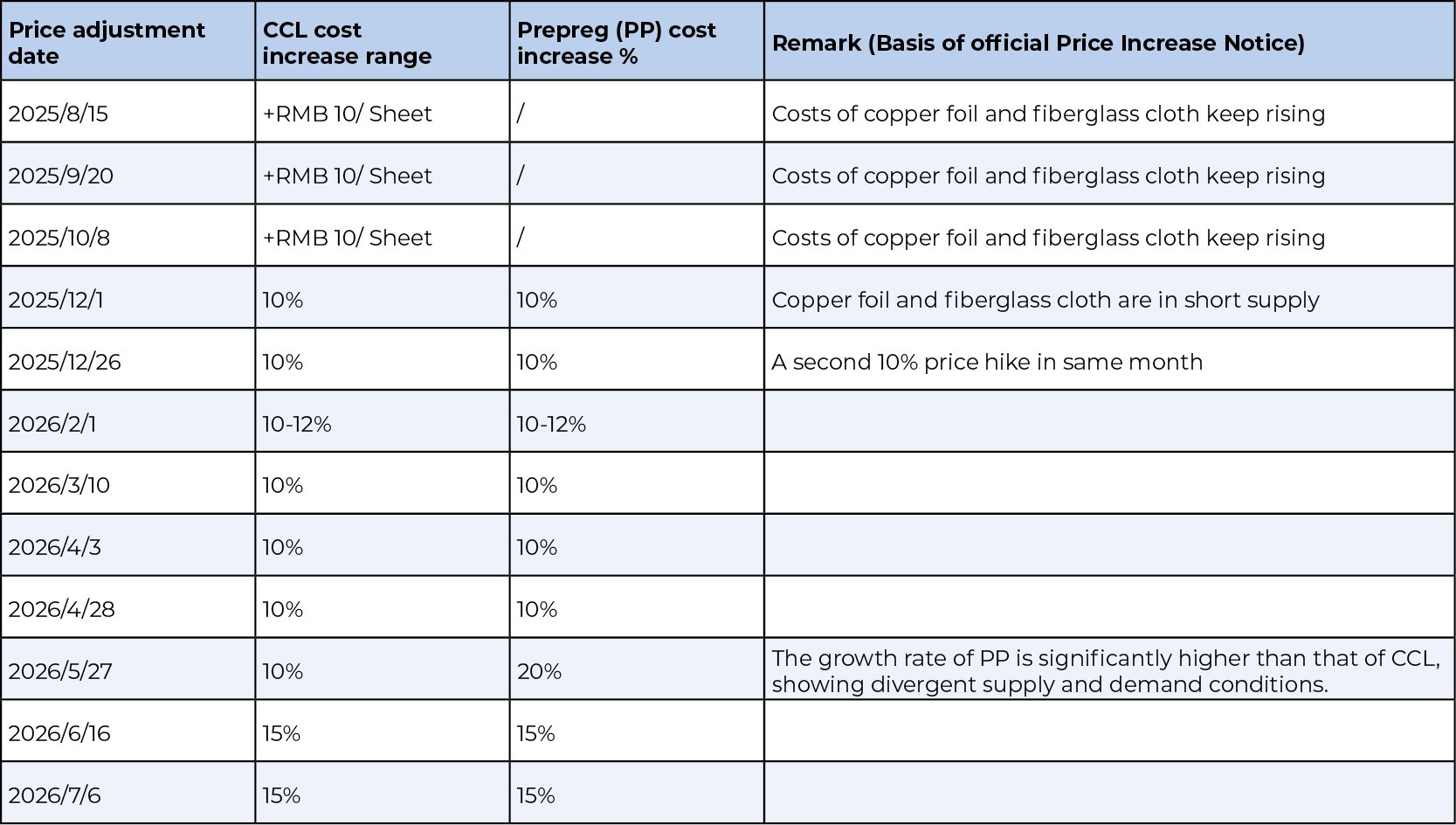
Recent industry reporting has pointed to significant pressure in PCB raw materials. Reuters reported that PCB prices rose by as much as 40% in April 2026, with delays tied to materials such as epoxy resin, glass fiber, and copper foil. The same report noted that epoxy resin lead times stretched from about 3 weeks to 15 weeks in some cases, while copper prices had increased roughly 30%. DigiTimes also reported that AI-driven demand is tightening upstream PCB material supply, with some copper-clad laminate lead times reaching up to 6 months and quota systems being imposed in constrained segments.
This does not mean every PCB design needs to change materials immediately. It does mean sourcing teams should review material requirements earlier, confirm actual availability before release, and understand which alternates may be acceptable before a shortage delays production.
Why FR-4 Shortages Matter
FR-4 is one of the most common base materials used in rigid PCB manufacturing because it offers a strong balance of cost, availability, mechanical strength, electrical insulation, and processing familiarity. For many industrial, medical, consumer, and commercial electronics, standard FR-4 remains the right choice.
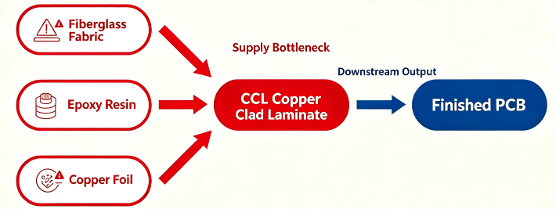
The challenge is that FR-4 availability depends on several upstream inputs, including glass fabric, epoxy resin, copper foil, and copper-clad laminate production capacity. When any of those inputs becomes constrained, sourcing teams may see longer lead times, increased pricing, allocation limits, or reduced flexibility in laminate brand, thickness, copper weight, or construction.
For buyers, the risk is not only material cost. The larger issue is schedule disruption. A design that is locked to one specific laminate, one copper thickness, one surface finish, or one approved supplier may be harder to source when availability changes.
Start With the Requirement, Not the Substitute
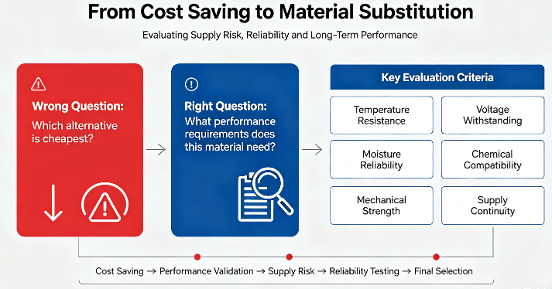
When a material is constrained, the first question should not be, “What is the cheapest replacement?” The better question is, “What performance requirements does this material actually need to meet?” Before approving an alternate, sourcing and engineering teams should review operating temperature, thermal cycling, controlled impedance, signal integrity, voltage requirements, dielectric performance, flexibility, bend radius, UL recognition, customer-specific approvals, IPC Class 2 or Class 3 expectations, and product lifecycle needs.
This review also needs to include assembly compatibility. A material change can affect reflow performance, solderability, cleaning, coating, documentation, and long-term reliability. For sourcing teams, the goal is to separate true engineering requirements from preferences that may have been copied forward from older drawings.
Alternative Base Materials for Rigid PCB Designs
When standard FR-4 becomes difficult to source, there may be several alternatives depending on the application.
High-Tg FR-4 may be a good option for boards that need better thermal performance, higher operating temperatures, or improved resistance to heat during assembly. It can also be useful when standard FR-4 availability is constrained, but it should still be checked for stackup compatibility, cost, and lead time.
Halogen-free FR-4 may be required for environmental, customer-specific, or regional compliance reasons. It can be a strong option, but buyers should confirm availability early because not every construction, thickness, or copper weight may be stocked.
Low-loss and high-speed laminates may be needed for RF, microwave, antenna, high-speed digital, or controlled-impedance applications. These materials should not be treated as simple FR-4 replacements. Dielectric constant, dissipation factor, thickness tolerance, copper roughness, and fabrication compatibility all matter.
Metal core PCB materials may be appropriate when thermal management is the primary issue. They are commonly used in LED lighting, power electronics, automotive electronics, industrial controls, and other applications where heat must be moved away from components efficiently.
Ceramic substrates may be considered for high-power, high-frequency, high-temperature, or thermally demanding applications. They can offer strong thermal conductivity and dimensional stability, but they also change the cost structure, manufacturing approach, and design rules.
The key point for sourcing teams is that “FR-4 alternative” does not mean one universal replacement. The right option depends on why FR-4 was selected in the first place.
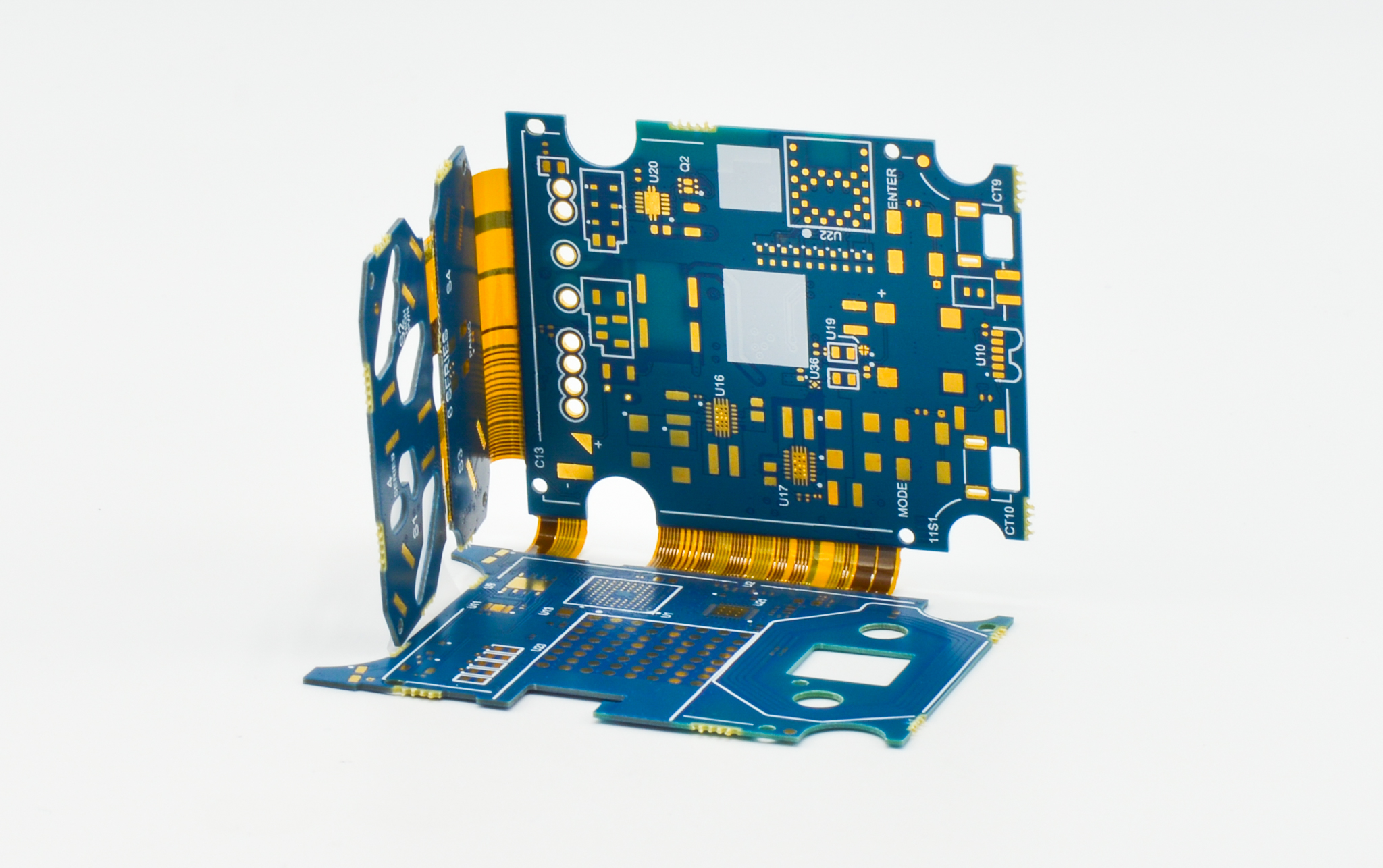
Flexible Circuit and Rigid-Flex Material Considerations
Flex and rigid-flex designs bring another layer of complexity. In many cases, the base material is polyimide rather than FR-4, and the material choice affects bend performance, dimensional stability, thermal resistance, copper adhesion, and long-term reliability.
For flexible circuits, sourcing teams should review:
• Adhesive-based versus adhesiveless polyimide constructions
• Rolled annealed copper versus electrodeposited copper
• Coverlay thickness and adhesive system
• Stiffener materials, including polyimide, FR-4, stainless steel, or aluminum
• Dynamic versus static flex requirements
• Bend radius and installation method
• Copper weight and trace geometry
• Whether the flex circuit will be assembled, overmolded, bonded, or folded
If a flex material becomes constrained, substitutions should be reviewed carefully. A material change can affect flexibility, copper fatigue life, dimensional movement, solder joint reliability, and fit inside the final assembly.
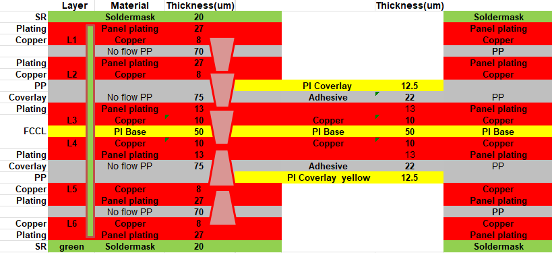
Copper Weight, Stackup, and Design Flexibility
Copper and laminate cost pressure is also affecting PCB material planning. In January 2026, Resonac announced a 30% price increase for copper-clad laminates and prepregs, effective for shipments beginning March 1, 2026. For sourcing teams, this reinforces the importance of confirming laminate availability, copper requirements, and approved material alternates before a PCB design is released.
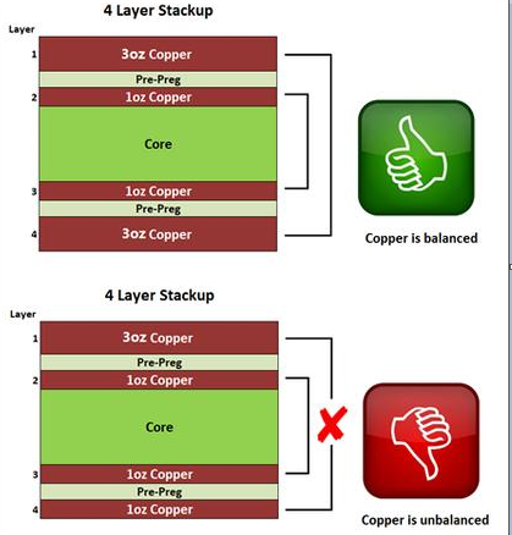
For sourcing teams, this is a good reason to review whether the specified copper weight is required across the entire design. Some boards truly need heavy copper for current carrying capacity, heat spreading, or mechanical robustness. Other boards may have inherited a copper requirement that is more conservative than necessary.
Possible review areas include:
• Can some layers use different copper weights?
• Can trace width, spacing, or plane design be adjusted?
• Is heavy copper required on all layers or only selected layers?
• Could thermal vias, heat spreaders, or metal core materials solve the thermal issue more effectively?
• Does the impedance model depend on a specific copper thickness or roughness?
• Will changing copper affect etching tolerance or minimum feature size?
Surface Finish Alternatives
Surface finishes are another area where sourcing teams may have options, but the best finish depends on the design, assembly process, shelf-life needs, component package types, and final application.
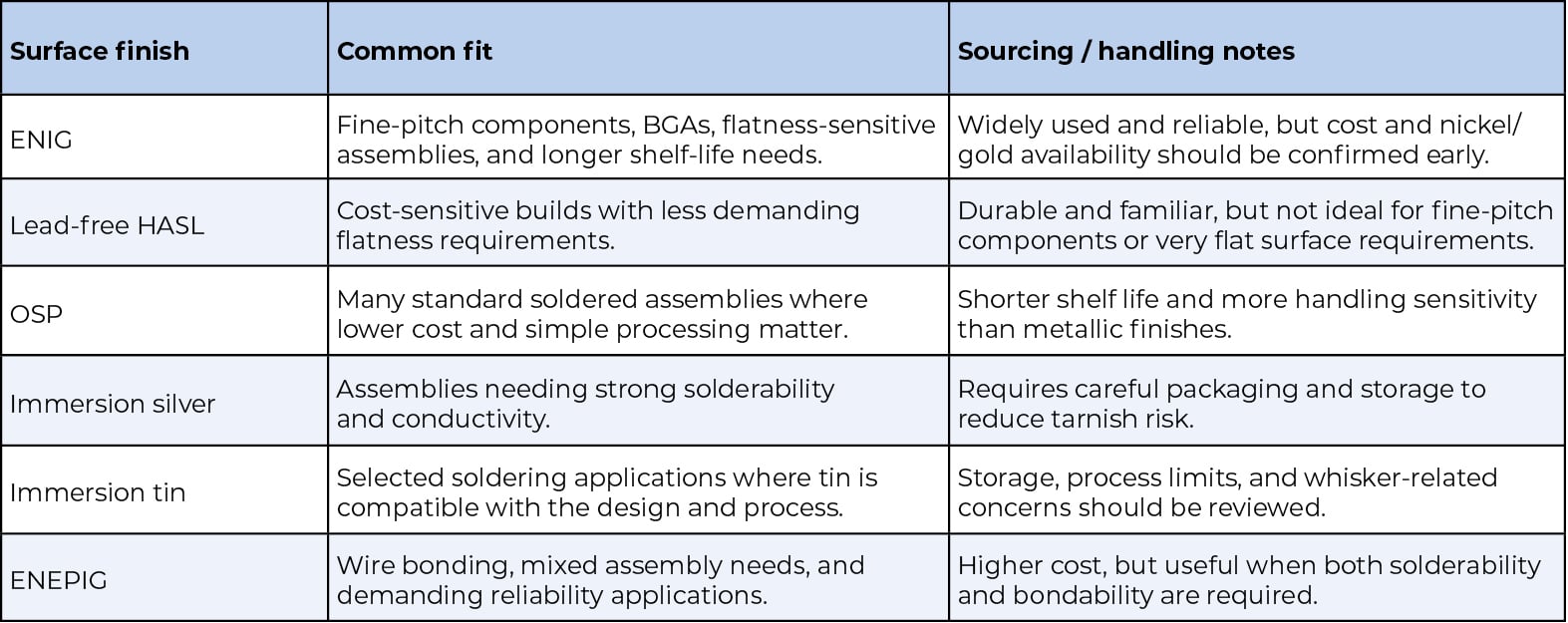
Surface finish should not be selected only by availability. It should be selected based on the assembly method, component package, expected storage time, reliability requirements, and customer specifications.
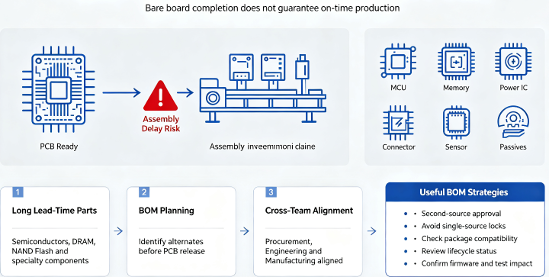
Component Shortages Can Delay the Assembly Even When the PCB Is Ready
A bare board material shortage is only one part of the supply-chain picture. Assemblies can still be delayed by long-lead components such as microcontrollers, memory, power devices, connectors, sensors, passives, and specialty electromechanical parts.
Component lead-time pressure has continued into 2026. ECIA survey reporting cited by Electronics360 found that more than half of participants saw semiconductor lead times increasing, with DRAM and NAND Flash showing especially strong pressure. Other sourcing updates have pointed to constrained availability across semiconductors, passives, and power components as OEM demand increases.
For sourcing teams, this means PCB material planning and BOM planning should happen together. A flex or rigid PCB can be fabricated on time, but the program may still miss its build window if a connector, MCU, sensor, or power component is not available.
Useful BOM strategies include:
• Identifying long-lead components before PCB release
• Approving second-source or alternate parts where possible
• Avoiding single-source components unless technically required
• Reviewing package compatibility before approving substitutions
• Checking lifecycle status and end-of-life risk
• Confirming whether alternates require layout, firmware, testing, or documentation updates
• Aligning procurement, engineering, and manufacturing before the build date
Design-for-Availability: A Practical Strategy for Sourcing Teams
Design-for-availability means making sourcing flexibility part of the design process. It does not mean lowering quality or accepting unqualified substitutions. It means identifying where flexibility exists before a shortage forces a rushed decision.
A practical design-for-availability review should define approved laminate alternates, avoid unnecessary brand-specific material callouts, confirm whether “or equivalent” language is acceptable, document critical electrical, thermal, and mechanical properties, and review surface finish options before release. It should also include approved alternate BOMs for high-risk components and clear notes on whether stackup changes could affect impedance, UL recognition, or customer approvals.
For flex and rigid-flex programs, this review should also address bend requirements before changing polyimide, copper, adhesive systems, or stiffeners. Maintaining documentation for customer approvals and repeat builds gives sourcing teams more room to respond when lead times shift without creating preventable quality or qualification risk.
When Not to Substitute Materials
Not every design should be changed quickly. Some products require formal review, testing, customer approval, or requalification before any material, finish, or component substitution is accepted.
Be especially careful with:
• Medical devices
• Aerospace and defense electronics
• Automotive electronics
• IPC Class 3 builds
• High-voltage PCBs
• RF and microwave designs
• Controlled-impedance high-speed designs
• UL-recognized constructions
• Dynamic flex circuits
• Rigid-flex assemblies
• Products with validated cleaning, coating, bonding, or overmolding processes
In these cases, the cost of an unapproved substitution can be much higher than the cost of waiting for the correct material.
Questions Sourcing Teams Should Ask Before Approving an Alternate
Before changing a base material, surface finish, or component, sourcing teams should ask:
1. What requirement is driving the original specification?
2. Is the material required by performance, compliance, customer approval, or habit?
3. Does the alternate affect impedance, dielectric performance, thermal reliability, or mechanical fit?
4. Does the change require customer approval or documentation updates?
5. Will the alternate affect assembly, solderability, cleaning, coating, bonding, or testing?
6. Is the alternate available for repeat production, or only for the current build?
7. Are there multiple approved sources, or does the change create a new single-source risk?
8. Does the change affect cost now but increase risk later?

Final Thoughts
PCB material shortages require more than quick substitutions. The strongest sourcing strategy is to understand which requirements are fixed, which specifications allow flexibility, and which decisions require engineering or customer approval.
For flex, rigid-flex, and rigid PCB programs, alternate base materials, surface finishes, copper constructions, and component options may help reduce risk. But each option should be reviewed against the product’s electrical, mechanical, thermal, compliance, and assembly requirements.
As material availability continues to change, sourcing teams should confirm lead times early, avoid unnecessary single-source specifications, and work with engineering and manufacturing partners before a design is locked.
Have Questions About PCB Material Alternatives?
If your team is reviewing FR-4 availability, flex material options, surface finish changes, or component substitutions, PICA can help answer questions before the design or purchase order is finalized. Contact our team to discuss material availability, sourcing flexibility, and manufacturability considerations for your next flex, rigid-flex, or rigid PCB program.
References
• Reuters. “Iran war disrupts the circuit board supply chain, raises costs for tech firms.” April 27, 2026. https://www.reuters.com/world/middle-east/iran-war-disrupts-the-circuit-board-supply-chain-raises-costs-tech-firms-2026-04-27/
• DigiTimes. “PCB CCL, AI applications, copper foil price.” March 27, 2026. https://www.digitimes.com/news/a20260327PD207/pcb-ccl-ai-applications-copper-foil-price.html
• Resonac Corporation. “Price adjustment of Copper Clad Laminates and Prepregs.” January 16, 2026. https://www.resonac.com/news/2026/01/16/3704.html
• Electronics360 / ECIA. “Strongest sales sentiment for electronic components in 4.5 years.” 2026. https://electronics360.globalspec.com/article/23407/ecia-strongest-sales-sentiment-for-electronic-components-in-4-5-years
• Astute Group. “Rising component lead times pressure Q3 manufacturing schedules.” 2026. https://www.astutegroup.com/news/general/rising-component-lead-times-pressure-q3-manufacturing-schedules/