 English

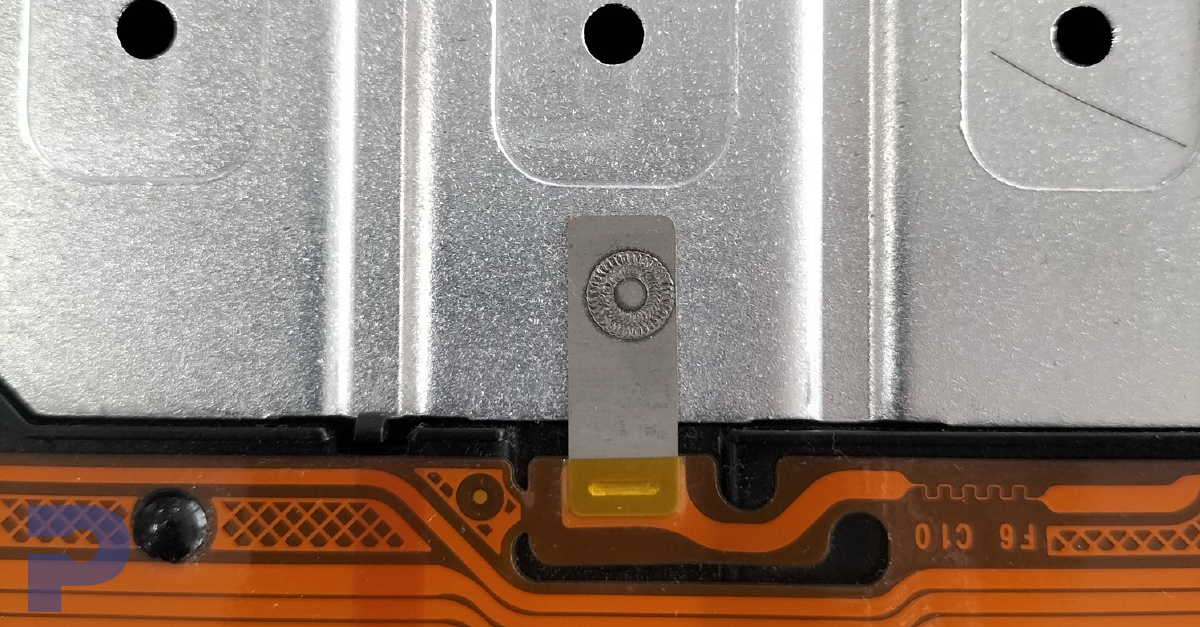
Flexible circuits are often chosen for their ability to route signals through tight spaces while tolerating bending and movement. However, the connection points of a flex circuit can experience significant mechanical and electrical stress, especially in high-power or high-reliability applications.
One solution used in advanced flex circuit assemblies is nickel tab mounting, sometimes referred to as Ni tab reinforcement. Nickel tabs provide a robust mechanical and electrical interface between the flex circuit and external connections, improving durability and current-handling capability.
In many designs, Ni tabs help reinforce termination areas where standard copper pads alone may not provide sufficient strength.
What Is a Nickel Tab?
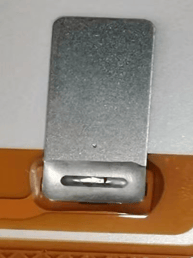
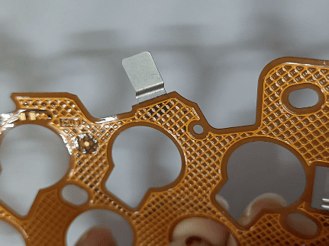
A nickel tab is a metal reinforcement element, typically made from nickel or nickel-plated material, that is attached to a flex circuit at a connection or termination point.
The tab extends from the flex circuit and provides a stronger interface for electrical connection or mechanical attachment. These tabs can be used for:
• Battery connections
• Power delivery points
• Grounding tabs
• Welding interfaces
• Structural reinforcement at connectors
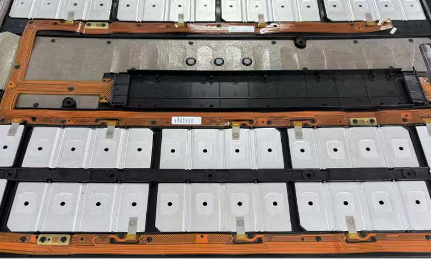
Nickel is commonly used because it offers excellent corrosion resistance, good conductivity, and strong weldability, particularly in battery and power applications.
Why Standard Flex Pads Sometimes Need Reinforcement
Flex circuits are designed with thin copper conductors to maintain flexibility. While this is ideal for routing signals and enabling bending, the thin copper can become a limitation in certain situations.
For example, termination points may experience repeated mechanical stress, higher electrical current, welding or soldering heat, and assembly forces during installation.
Without reinforcement, these stresses can cause copper fatigue, pad damage, or connection failures over time. Nickel tabs help distribute these forces and provide a more durable connection interface.
Need a flex circuit design that can handle higher current, stronger terminations, and demanding connection points?
Talk with PICA about engineered flex solutions built for reliability.
How Nickel Tabs Are Mounted on Flex Circuits
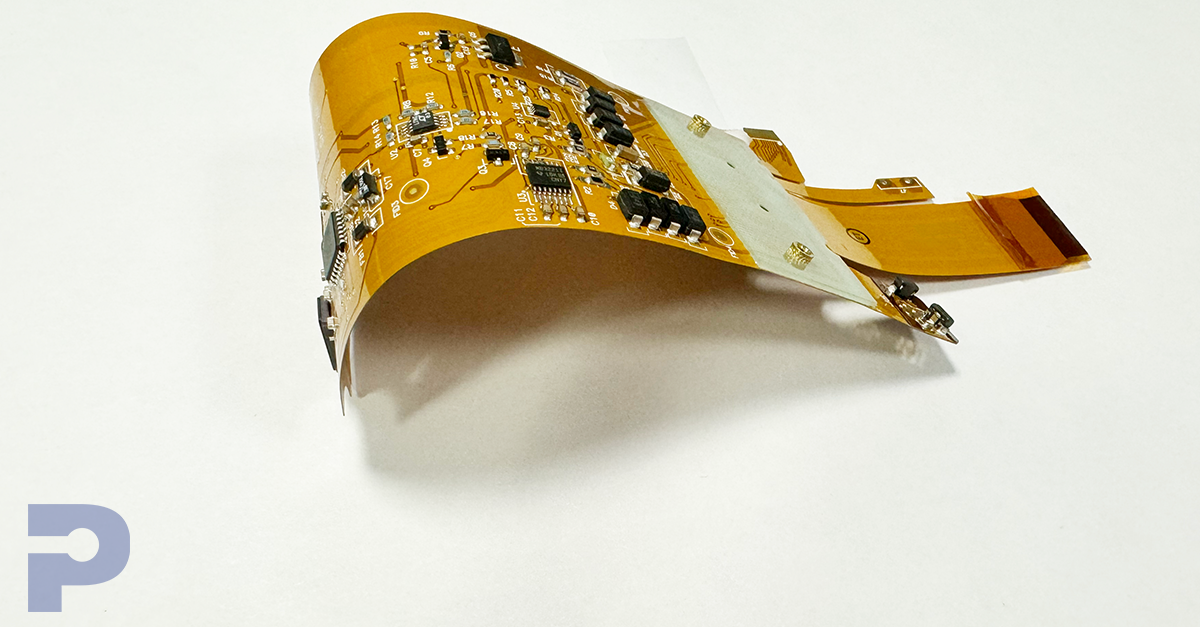
Integrating Ni tabs into a flex circuit assembly requires careful coordination between design, materials, and manufacturing processes.
1. Flex Circuit Design Preparation
The flex PCB layout includes a designated mounting area where the nickel tab will attach. Engineers often design these areas with reinforced copper pads, additional plating thickness, and anchoring structures for mechanical bonding.
2. Tab Fabrication
Nickel tabs are typically stamped or laser cut from nickel or nickel-plated metal stock. The geometry is tailored to the application.
3. Attachment Process
Common attachment methods include resistance welding, soldering, and laser welding depending on the application requirements.
4. Reinforcement and Encapsulation
In many cases, the tab mounting area is reinforced using adhesive bonding layers, polyimide stiffeners, or overmolding to improve mechanical strength and environmental protection.
Key Benefits of Nickel Tab Mounting
1. Higher Current Capacity
Nickel tabs allow flex circuits to carry higher electrical currents by providing a thicker and more robust conductive interface.
2. Improved Mechanical Strength
Termination areas are often the most mechanically vulnerable parts of a flex circuit. Nickel tabs reinforce these points and distribute stress more evenly.
3. Reliable Welding Interface
Nickel is highly compatible with spot welding and resistance welding, making it ideal for battery pack connections and other welded assemblies.
4. Enhanced Durability
Nickel’s corrosion resistance helps maintain electrical performance in environments where humidity, chemicals, or temperature variations are present.
5. Design Flexibility
Nickel tabs allow engineers to create custom connection geometries that simplify assembly and integration into larger mechanical systems.
Applications for Nickel Tabs on Flex Circuits
Nickel tab mounting is used in applications where flex circuits must connect to higher power interfaces or structural mounting points.
1. Battery Systems
Battery management systems often use nickel tabs to connect flex circuitry to battery cells or power terminals.
2. Automotive Electronics
Ni tabs are commonly used in EV battery modules, sensor assemblies, and power distribution systems.
3. Medical Devices
Medical electronics may require reinforced flex terminations where cables connect to monitoring or diagnostic equipment.
4. Consumer Electronics
Wearable devices and portable electronics sometimes use nickel tabs to create compact power connections.
5. Industrial Equipment
Industrial automation systems often require reinforced electrical interfaces that can withstand vibration and mechanical stress.
Conclusion
Flexible circuits are excellent at routing signals through compact and dynamic environments, but their thin copper conductors can sometimes require reinforcement at critical connection points.
Nickel tab mounting provides a practical solution by strengthening termination areas, improving current capacity, and enabling robust welded or soldered connections.
For applications that combine flexibility with higher electrical or mechanical demands, integrating nickel tabs into the flex circuit design can significantly improve reliability and long-term performance.