 English

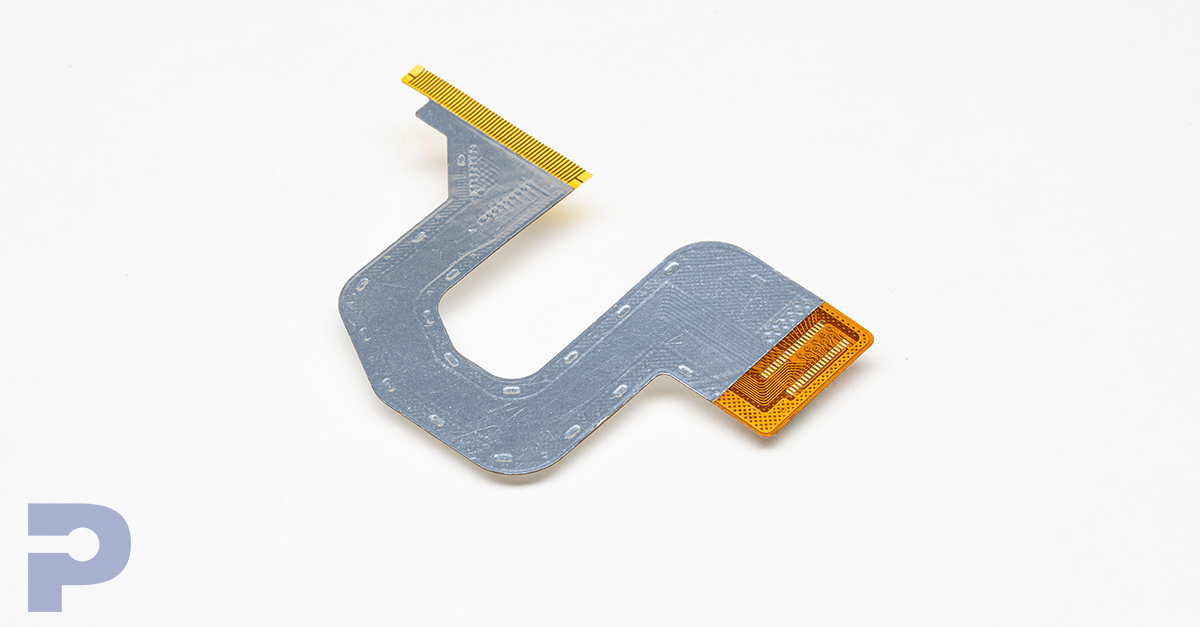
Stiffener, EMI Shielding, Release liners, spacers, marking inks, thermally conductive adhesive films, and PSA selection guidance.
Why Auxiliary Materials Matter in Flex PCB Reliability
When engineers talk about flex PCB materials, the focus is usually on the core stack-up: substrate film, copper, adhesives, and coverlay. But many reliability and assembly issues are driven by a second layer of decisions: auxiliary materials.
These materials may not always be identified as critical on the electrical drawing, but they often determine:
• Whether assembly can be repeated consistently
• Whether parts remain aligned during bonding and lamination
• Whether markings stay legible after cleaning and reflow
• Whether thermal interfaces perform as intended
This guide covers three auxiliary categories that are often under-documented in flex design packages:
• Stiffeners including Polyimide (PI) stiffener, FR4 stiffener, Metal stiffener (Such as steel, aluminum, copper, etc.)
• EMI Shielding including conductive Silver/Copper Paste, Metal Foil Shielding, Conductive Fabric.
• Release liners, spacers, and marking inks
• Thermally conductive adhesives and films as material choices
• PSA (pressure-sensitive adhesive) selection guidance, including temperature limits and assembly impacts
1. Stiffeners
The importance of stiffeners
The stiffeners can significantly improve the rigidity of specific areas, prevent problems such as line breakage and solder joint detachment when plugging and unplugging connectors, bending or external impact, and extend the service life of the product.
Improve flatness and installation accuracy Reinforcement boards can provide support for flexible circuit boards, ensure that they remain flat during assembly, and facilitate the precise installation and welding of electronic components.
Auxiliary heat dissipation and electromagnetic shielding partial reinforcement materials (such as metal reinforcement plates) have good thermal conductivity, which can help disperse the heat generated by electronic components and reduce the local temperature. At the same time, metal reinforcement plates can also play a certain role in electromagnetic shielding to reduce the impact of external electromagnetic interference on signal transmission.
Application
The connector area provides support for the connector, ensuring stability and reliability during mating and unplugging operations.
The SMT soldering area enhances the rigidity of the soldering area, facilitating the soldering operation of surface-mount components (such as chips, resistors, capacitors, etc.), and improving the soldering quality and stability.
In the high-frequency signal transmission area, reinforcement materials with excellent dielectric properties (such as BT stiffeners) are used at the parts where high-frequency signals need to be transmitted, which can reduce signal loss and interference and ensure the integrity and accuracy of signal transmission.
Dynamic bending area For flexible circuit boards that need to bend frequently, reinforcement boards can choose materials with good bending resistance (such as polyimide stiffeners) to ensure bending performance while providing necessary mechanical support.
Practical guide
Material selection
Polyimide (PI) stiffeners: high temperature resistance, bending resistance, good insulation, suitable for high temperature environments, high-frequency bending scenarios (such as folding screen mobile phones, wearable devices).
FR-4 stiffeners: strong rigidity, excellent insulation, high temperature resistance (130°C-150°C), suitable for interface parts that require high-strength support (such as BTB connectors).
Metal stiffeners (such as stainless steel and aluminum): High mechanical strength, with electromagnetic shielding functions, suitable for anti-interference scenarios such as automotive electronics and industrial equipment.
PET stiffeners: low cost, good flexibility, but poor temperature resistance (≤ 120°C), suitable for ordinary cable rowing in room temperature environment.
The thickness and size of the stiffeners should be comprehensively determined according to the specific application and the thickness and bending requirements of the flexible circuit board. Generally speaking, the thickness is between 0.1mm-0.5mm, and the size should be slightly larger than the area that needs to be reinforced to ensure the reinforcement effect.
Lamination process
Thermocompression reinforcement: The thermosetting adhesive of the reinforcement film is melted through high temperature, and the reinforcement board is tightly fitted to the flexible circuit board, which is suitable for scenarios with high bonding strength.
Pressure-sensitive reinforcement: No need for heating, the reinforcement board is attached to the flexible circuit board by pressure, which is simple to operate and suitable for temperature-sensitive flexible circuit boards.
Design considerations
The stiffeners should avoid covering the bending area of the flexible circuit board to avoid affecting the bending performance.
At the connection between the stiffeners and the flexible circuit board, the adhesive layer should be uniform and free of bubbles to ensure the bonding strength.
For stiffeners that need to be grounded, a reasonable grounding path should be designed to ensure reliable electrical connections.
2. EMI Shielding
Flexible circuit boards are often used to transmit high-frequency and high-speed signals, such as display driver signals and data transmission signals in mobile phones, tablets and other devices. EMI shielding can effectively prevent external electromagnetic interference from entering the circuit board, avoid problems such as signal distortion and increased bit error rate, and ensure accurate signal transmission.
EMI structure
Shielding film is usually a multi-layer composite structure, consisting of three layers of substances: conductive layer, insulating layer, and viscose layer.
Common materials
Metal alloy foil: such as silver layer, aluminum foil, etc., has excellent shielding performance.
Conductive fabric fibers (usually polyester or cotton) are coated with metal (e.g., copper, nickel).
Metal plating forms a metal layer (such as copper, silver) on plastic film (such as PET) through vacuum sputtering, electroplating, etc.
Conductive filler composite layer: Fill conductive particles such as silver, copper, nickel, etc. in adhesive or resin.
Application
Consumer Electronics, Medical Devices, Automotive Electronics, Aerospace, Industrial Automation
Practical guide
Choose the Right Shielding Material:
Copper layer shielding: The shielding effect is good, allowing for controlled impedance design but increasing the thickness and cost of the circuit board, suitable for scenarios with high shielding requirements and space allowance.
Need better flex PCB reliability?
Learn how the right auxiliary materials—from stiffeners and shielding to PSAs and thermal films—can improve performance, reduce assembly issues, and support long-term product success.
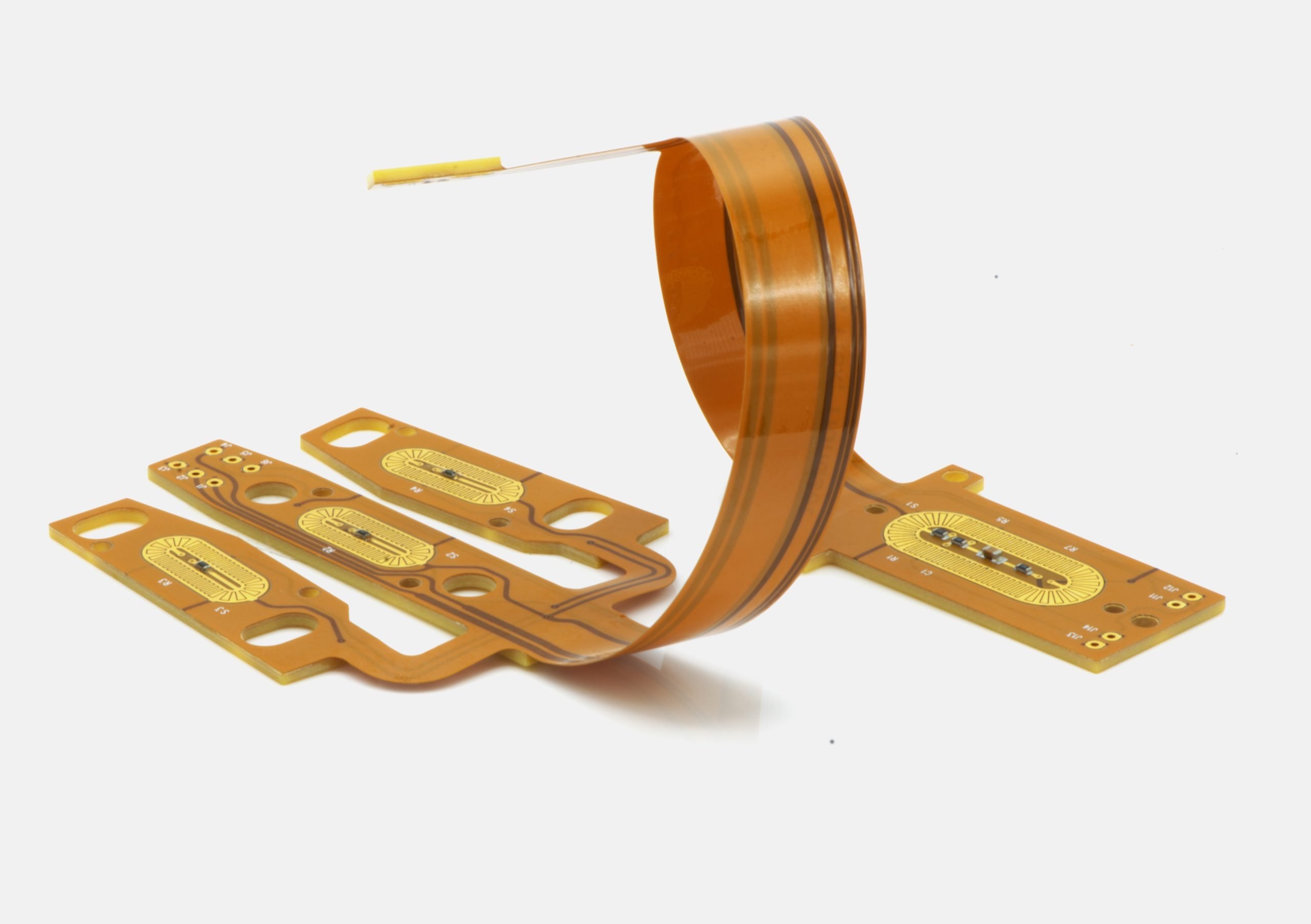
Silver ink shielding: lower cost, good flexibility, but slightly lower conductivity, suitable for cost-sensitive applications where shielding requirements are not extremely high.
Shielding film: thin and flexible, suitable for space-constrained designs, but attention should be paid to its bonding quality and grounding effect with the circuit board.
3. Release liners, spacers, and marking inks
Small materials that control big process outcomes
Release liners
Release liners are the protective backings used on PSA-backed parts, adhesive films, and some thermal interface materials. They influence handling, placement, and contamination risk.
Why release liners matter
Clean removal and residue control
Some liners release cleanly. Others can leave residues or particles that reduce adhesion or create cosmetic defects.
Static and handling behavior
Liners can build static, attract dust, and increase contamination risk during manual assembly.
Peel force and operator variability
If liner removal requires high force, it can stretch thin flex parts, shift alignment, or introduce handling damage.
Practical guidance
• Specify liner type when placement accuracy is critical or contamination risk is high.
• Validate liner removal in the actual assembly sequence, not only on the bench.
Spacers (bondline control and stack management)
Spacers show up in flex builds as temporary or permanent elements that help control thickness, alignment, or separation between layers.
Where spacers matter most
Bondline thickness control
In adhesive bonding and thermal interface assemblies, bondline thickness can determine performance and reliability. Too thin can cause squeeze-out. Too thick can reduce thermal transfer or mechanical stability.
Gap management near components and stiffeners
Spacers can prevent local over-compression, reduce stress concentration, and help keep the assembly geometry stable.
Practical guidance
• Treat spacer selection as part of the process window. It affects pressure settings, squeeze-out risk, and final thickness.
• If the spacer is permanent, confirm compatibility with reflow, humidity, and chemical exposure.
Marking inks (legibility, process compatibility, and compliance)
Marking inks and legends on flex can be exposed to reflow, cleaning, handling, and abrasion. Failure is common when the ink is not compatible with the full process path.
Typical marking failures
• Smearing during handling or cleaning
• Loss of contrast after reflow cycles
• Poor adhesion to coverlay or exposed film
• Chemical attack from cleaning agents or conformal coatings
Practical guidance
• Define what the marking must survive: reflow cycles, cleaning chemistry, abrasion, or sterilization.
• Confirm adhesion on the exact surface being marked (coverlay, exposed film, solder mask alternatives, or stiffener surfaces).
• If traceability is a requirement, validate that markings remain readable after the full build and test sequence.
4) Thermally conductive adhesives and films
Treat thermal interfaces as materials, not assumptions
Thermal performance in flex assemblies often depends on materials that sit between the heat source and the heat sink. These materials include thermally conductive adhesive films, pads, and bonding layers. They are not interchangeable.
Key performance variables to evaluate
Thermal conductivity vs real thermal resistance
A high conductivity value does not guarantee a low thermal resistance in your build. Thickness, compression, and bondline uniformity matter.
Bondline thickness stability
If the material pumps out, creeps, or squeezes out over time or temperature cycling, thermal performance can degrade.
Mechanical compliance
Flex assemblies often involve bending and mismatch. A thermal interface that is too stiff can transfer stress into solder joints, stiffener boundaries, or component interfaces.
Electrical properties
Some thermal materials are electrically insulating, others are not. Confirm what your design requires.
Process compatibility
Consider how the material behaves during lamination, compression, and reflow. Also consider reworkability if repairs are expected.
Common failure modes in thermal interface selection
• Loss of contact due to creep or compression set
• Pump-out during cycling, creating voids and hotspots
• Adhesion loss on one side due to surface prep or incompatible substrate
• Stress-related failures due to stiffness mismatch
Practical guidance
• Define the allowable bondline thickness range and confirm it is achievable in production.
• Validate performance across the real temperature cycle and mechanical use conditions, not just at room temperature.
• If the thermal interface is also structural, treat it as a reliability-critical adhesive.
5) PSA selection guidance for flex assemblies
Performance, temperature limits, and assembly impacts
PSAs are everywhere in flex builds: stiffener attachment, shielding attachment, strain relief, mounting and fixturing, and temporary holds. They are easy to specify and easy to underestimate.
What to define before selecting a PSA
• Temperature exposure: consider both assembly temperature and service temperature. Some PSAs soften, creep, or lose strength as temperature increases.
• Load type: PSAs behave differently under peel, shear, and tensile loading. Flex assemblies often create peel at edges and shear across larger areas.
• Surface energy and texture: adhesion depends on what the PSA is bonding to (polymer film, coverlay, metal, plated surfaces) and whether surfaces are smooth, textured, or contaminated.
• Chemical exposure: cleaning agents, oils, and solvents can reduce adhesion or cause swelling.
• Rework needs: define what “removable” means. Clean removal without residue differs from maximum strength.
PSA temperature limits and real-world behavior
A PSA can appear strong at room temperature, then creep under sustained load at elevated temperature. In flex assemblies, creep can cause stiffeners to shift over time, shields to lift at edges, and strain relief features to lose effectiveness.
Practical guidance
• Specify the highest service temperature and the load condition at that temperature.
• Consider edge design: PSAs often fail by edge peel, not by bulk shear.
Assembly impacts engineers should plan for
Placement variability
PSA-backed parts can trap air or align poorly if the liner removal and placement sequence is not controlled.
Pressure and dwell requirements
Some PSAs require firm pressure and time to reach full bond strength. If the part is stressed immediately after placement, early failures can occur.
Contamination sensitivity
Finger oils, dust, and release-liner residues can reduce bond strength significantly.
Practical guidance
• Build a simple placement spec: surface cleaning method, placement pressure guidance, and minimum dwell before stressing the bond.
• Validate the PSA in the actual assembly flow, including cleaning, reflow exposure if applicable, and post-build handling.
Auxiliary materials are often treated as “shop-floor details,” but they influence yield, reliability, and long-term stability in flex assemblies. When documented clearly, they reduce build variability and prevent late-stage failures that look like core material problems but are actually bonding, handling, or process issues.