 English

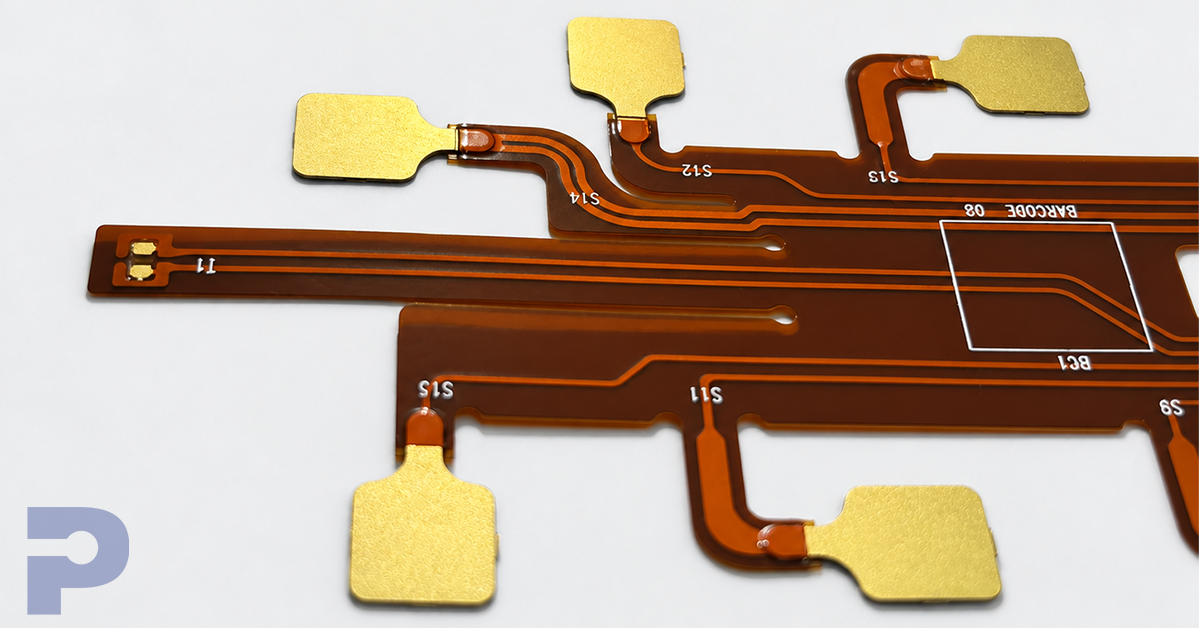
Sculptured flex circuit featuring 7 oz copper battery contact pads and 2 oz copper circuitry, combining robust connection points with thinner conductors that facilitate polyimide (PI) film lamination.
Flexible printed circuits (FPCs) offer significant advantages in applications where space, weight, and mechanical flexibility are critical. However, conventional flex circuits have limitations, particularly when an application requires both flexible conductors and mechanically robust electrical terminations.
Sculptured flex technology addresses this challenge by incorporating different copper thicknesses within the same circuit.
What Makes Sculptured Flex Different?
Unlike conventional flexible circuits, which typically use uniform copper thickness, sculptured flex circuits feature conductors that transition between thin, flexible sections and thicker, more rigid termination areas.
This is achieved through a controlled selective etching process that creates varying copper thicknesses along the conductor.
The result is a circuit that combines the flexibility of an FPC with the mechanical strength needed for certain electrical connections, potentially eliminating separate connectors or terminals.
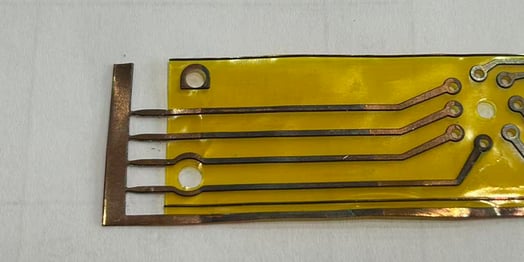 Sculptured flex circuit with integrated terminations that reduce connector requirements, space, and weight
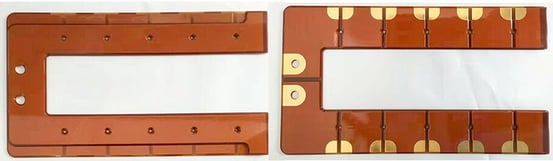 Integrated contacts reduce the number of separate interconnection components, simplifying assembly
Where Does Sculptured Flex Add Value?
Sculptured flex can provide significant advantages in applications requiring:
-
- Integrated terminations: Thicker copper features can serve as electrical contacts, reducing the need for separate components
- Space and weight reduction: Eliminating connectors can simplify assemblies and reduce their footprint
- Assembly simplification: Fewer interconnection components can reduce assembly operations and potential failure points
- Mechanical flexibility: Thin copper sections accommodate bending while thicker sections provide stronger termination features
- Battery connections: Thicker copper contact features can replace separate nickel tabs in suitable battery pack designs
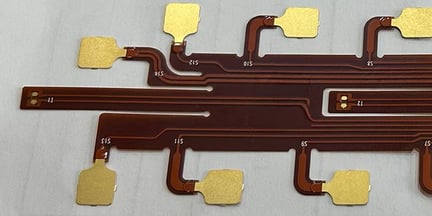
- Sculptured flex circuit combining flexible conductors with thick copper battery contacts
These characteristics make sculptured flex particularly attractive for specialized applications in aerospace, medical instrumentation, industrial electronics, and other demanding environments.
Which Flex PCB Option Is Right for Your Application?
From conventional flex to sculptured flex and rigid-flex, the right choice depends on your design requirements. PICA Manufacturing Solutions can help you evaluate your options and identify the best fit for performance, reliability, and manufacturability.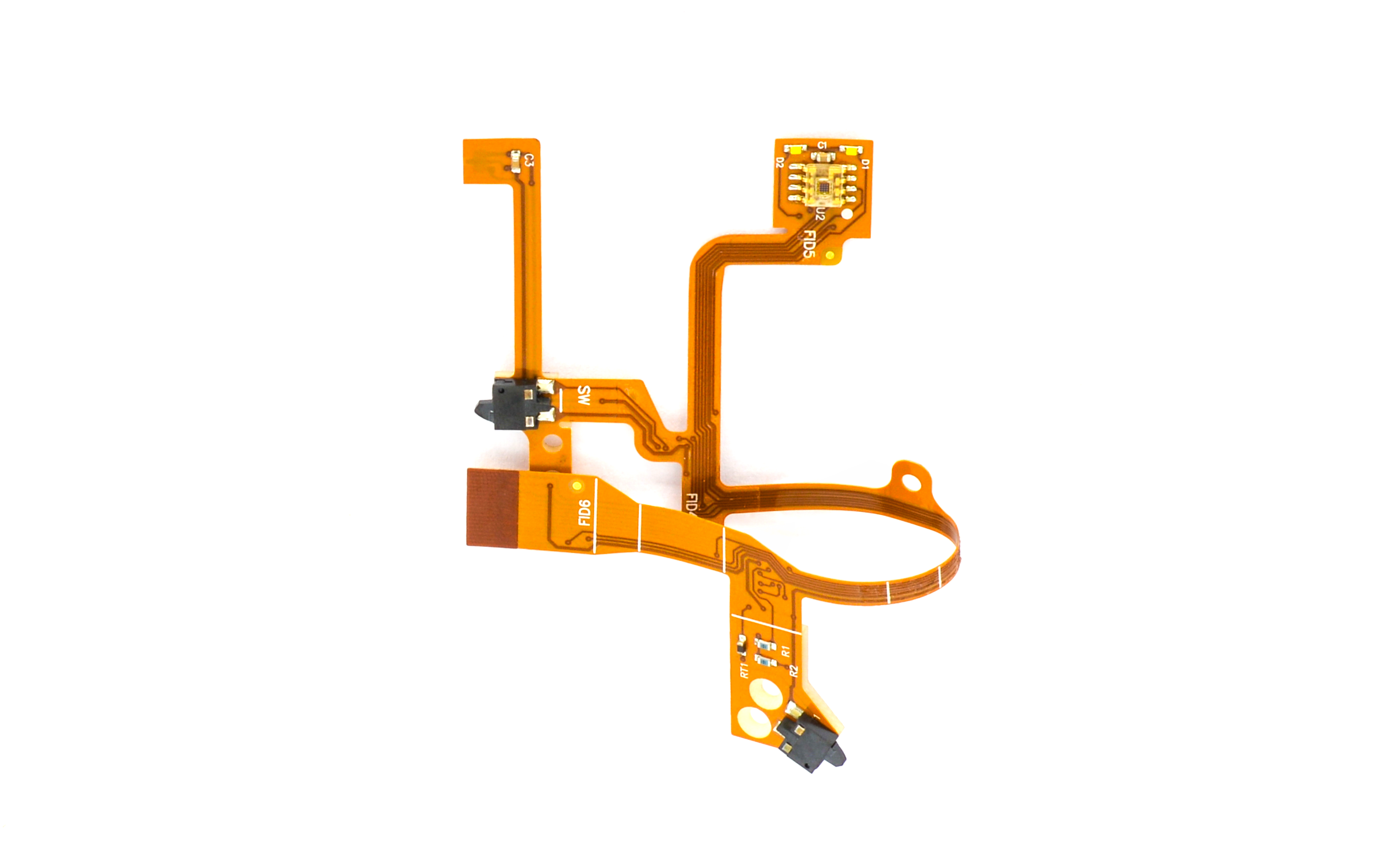
Manufacturing Challenges: What Can Go Wrong?
While sculptured flex offers unique advantages, manufacturing requires specialized expertise and precise process control.
The transition between thick and thin copper is particularly critical. Poorly controlled etching can create dimensional inconsistencies or stress concentrations that compromise reliability.
Other considerations include conductor geometry, contact surface finishes, mechanical fatigue, and the interaction between termination design and assembly requirements.
A successful design must consider not only electrical performance but also mechanical stresses, manufacturing tolerances, and long-term reliability.
Designing It Right the First Time
Sculptured flex is not necessarily the best solution for every application. Conventional flex circuits may offer a simpler and more economical alternative when specialized termination features are unnecessary.
The key is evaluating the trade-offs early in the design process.
At PICA Manufacturing Solutions, we believe that manufacturing expertise should contribute to design decisions—not simply execute them.
By engaging experienced flex circuit specialists early, engineers can evaluate manufacturing feasibility, optimize conductor geometry, and avoid costly redesigns.
The objective is not simply to manufacture a flexible circuit, but to engineer the right interconnection solution from the beginning.