 English

PICA’s Approach to Total Cost of Ownership in Electronics Manufacturing
When companies evaluate manufacturing options, quoted piece price is often the first number they compare. It matters, but it is rarely the full cost. In electronics manufacturing, total cost of ownership is also shaped by supplier fit, engineering support, quality performance, logistics, tariffs, communication speed, inventory strategy, and the internal time required to manage problems when something goes wrong. A lower initial quote can become far more expensive over time if it leads to redesigns, late corrective action, shortages, expediting, or supply disruption.
That is where PICA takes a different approach. Instead of viewing manufacturing as a simple sourcing transaction, PICA works to reduce hidden cost across the full life of a program. This includes qualifying suppliers, matching the right manufacturing partner to the job, providing engineering and DFM support, maintaining quality and execution oversight, and coordinating logistics and communication across regions. The goal is not just to buy a part at a lower price, but to build a more stable and manageable path from design through delivery.
Looking Beyond Piece Price
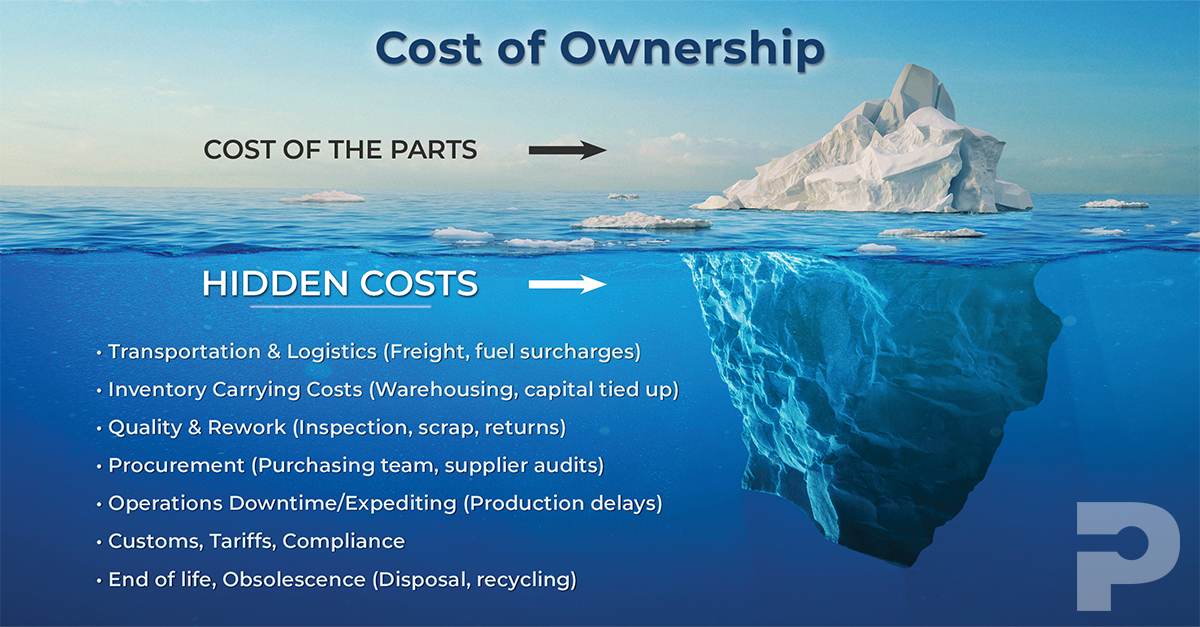
A useful way to think about TCO is as a waterline. Above the waterline is the visible purchase price shown on the quote or invoice. Below it are the less visible costs that can have just as much impact, or more, over the life of the program. These often include transportation and freight costs, inventory carrying expense, quality and rework, procurement effort, downtime, expediting, customs and tariffs, and eventual obsolescence or end-of-life handling.
A typical TCO model may show purchase price accounting for roughly 40 to 60 percent of total cost, while transportation may represent 10 to 20 percent, inventory carrying 10 to 15 percent, quality and rework 5 to 15 percent, procurement operations 5 to 10 percent, and downtime or expediting another 5 to 10 percent. The exact percentages vary by program, but the message stays the same: a lower unit price does not always mean a lower total cost. In many cases, suppliers with the lowest quote create higher hidden costs later through poor execution, longer lead times, or avoidable quality issues.
Qualified Vendors and Quality Control Matter
A major part of reducing total cost of ownership is making sure the right vendors are qualified before production begins. PICA works with prequalified manufacturing partners that are evaluated for technical capability, engineering support, quality systems, certifications, lead time, and long-term fit for the program. Suppliers are not chosen on price alone. They go through audits, inspections, and ongoing performance reviews to help confirm they can meet customer requirements consistently.
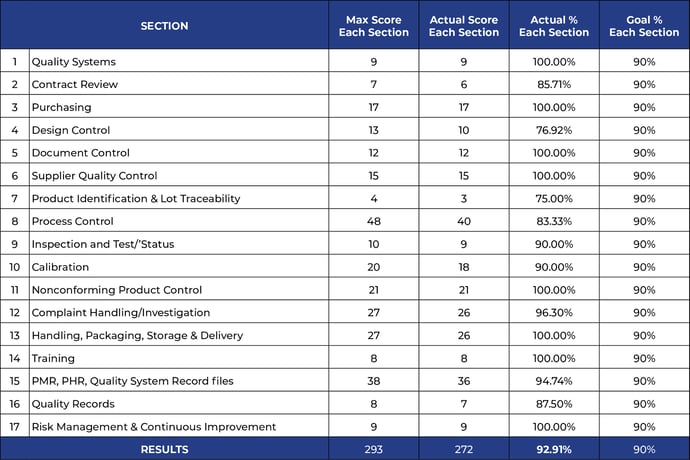
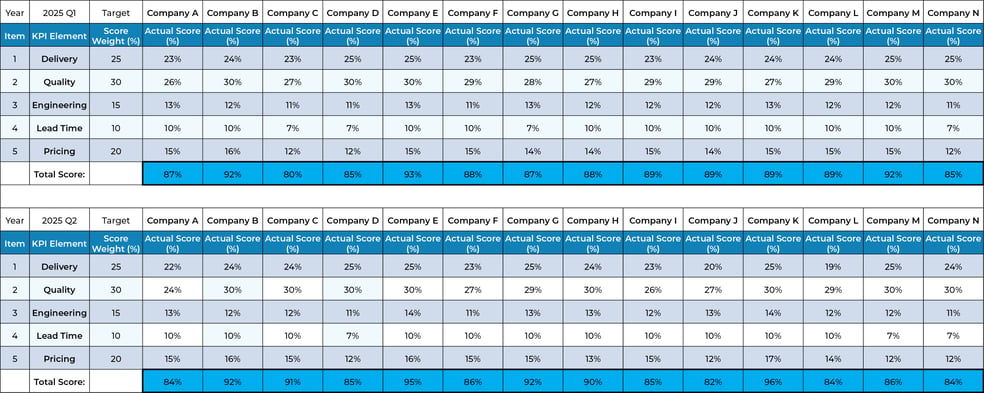
PICA also maintains oversight after qualification. Vendors are monitored through report cards, annual audits, and corrective action follow-up to help protect quality, delivery, and responsiveness over time. If a supplier falls short, issues are addressed directly and improvement is required. This helps reduce the hidden costs tied to quality failures, rework, shortages, delays, and avoidable disruption.
In some cases, PICA also invests in qualified vendors to help improve long-term performance. That can include support for additional equipment, staffing, training, or engineering resources when those improvements strengthen the supplier's ability to meet customer needs. Instead of simply managing vendors at a distance, PICA helps build a stronger and more reliable manufacturing network. For customers, that means better execution, better visibility, and a lower risk of problems that increase cost over time.
One of the clearest examples is PICA's dual-source strategy. When customers require primary and backup source qualification, PICA can help identify and qualify alternative suppliers through a network of manufacturing partners with overlapping capabilities and available capacity across China and Southeast Asia. That gives customers a practical way to reduce dependence on a single supplier before disruption happens. If one source becomes constrained by regional, operational, or commercial issues, another path is already in motion, reducing both delay and requalification risk.
Geographic flexibility also plays an important role in total cost of ownership. PICA's investment in PMSM created an additional sourcing path in Southeast Asia for customers that wanted stronger resilience beyond China-only sourcing. This became especially valuable during tariff pressure, COVID-related disruption, logistics instability, and shifting geopolitical conditions. A China-plus-one strategy can help customers respond more effectively when market conditions change, while still balancing price, lead time, technical fit, and long-term supply stability.
Stop optimizing for piece price alone.
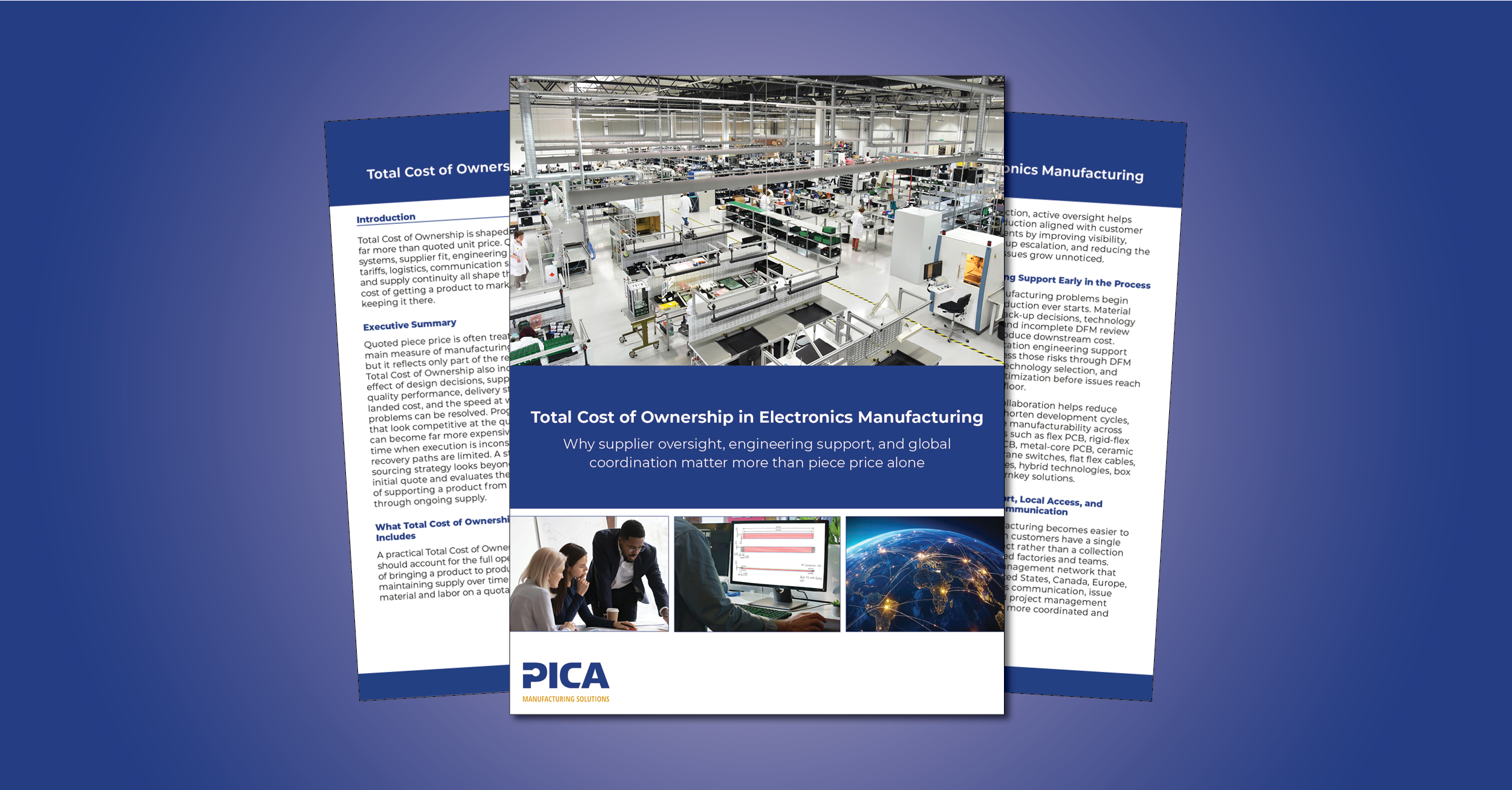
Download our white paper to learn how a Total Cost of Ownership approach reduces hidden costs, improves reliability, and strengthens your supply chain.
Global Oversight and Coordination
Oversight is another major part of reducing total cost. In addition to its own operations in the United States and Malaysia, PICA supports customer programs through qualified manufacturing partners in China and places resident personnel within partner manufacturing lines to help monitor key performance indicators such as on-time delivery, yield, engineering execution, project management, and cost performance. That added visibility helps improve response time, accountability, communication, and day-to-day control. For customers, that means fewer surprises and greater confidence that quality and delivery expectations are being actively managed.
Cost Reductions Through Better Planning
PICA also helps lower cost earlier in the process. Through application engineering and DFM support, customers can make better decisions on materials, stackups, and technology before production begins. That early guidance can help prevent redesigns, improve manufacturability, and reduce the downstream cost of solving avoidable issues after a program is already in motion. In many cases, those savings are not obvious in the original quote, but they become very real over the life of the product.
Logistics and Risk Mitigation
Another advantage is coordination. Many customers do not want to manage multiple factories, suppliers, logistics contacts, and late-night issue calls on their own. PICA helps simplify that burden through a more centralized support structure that coordinates supplier follow-through, communication, logistics, and escalation. That makes it easier to resolve problems quickly and reduces the internal time customers spend chasing updates across disconnected regions and organizations.
A More Practical View of Total Cost
The result is a more practical view of cost. The lowest quoted price is not always the best long-term value if it leads to delays, rework, quality escapes, or weak supply continuity. By combining qualified supplier selection, engineering support, active oversight, backup planning, and global coordination, PICA helps customers reduce hidden manufacturing cost and build a more resilient supply chain. For companies looking beyond piece price alone, total cost of ownership becomes a much clearer and more valuable way to evaluate the right manufacturing partner.
A lower purchase price often leads to higher hidden costs (e.g., poor quality causing rework). TCO analysis helps you choose suppliers based on total impact, not just unit price.