PCB manufacturing is evolving fast as devices become smaller, faster, and more reliable. New fabrication processes like HDI, additive copper, advanced laminates, and automated inspection are reshaping the industry. This post explores the innovations that improve yield, reduce defects, and expand what designers can achieve.
Advancements in PCB manufacturing impact everything from signal integrity to miniaturization. In this article, you’ll learn which innovations matter most, why they're used, and how they improve performance, reliability, and cost.
Why Innovation Matters in PCB Manufacturing
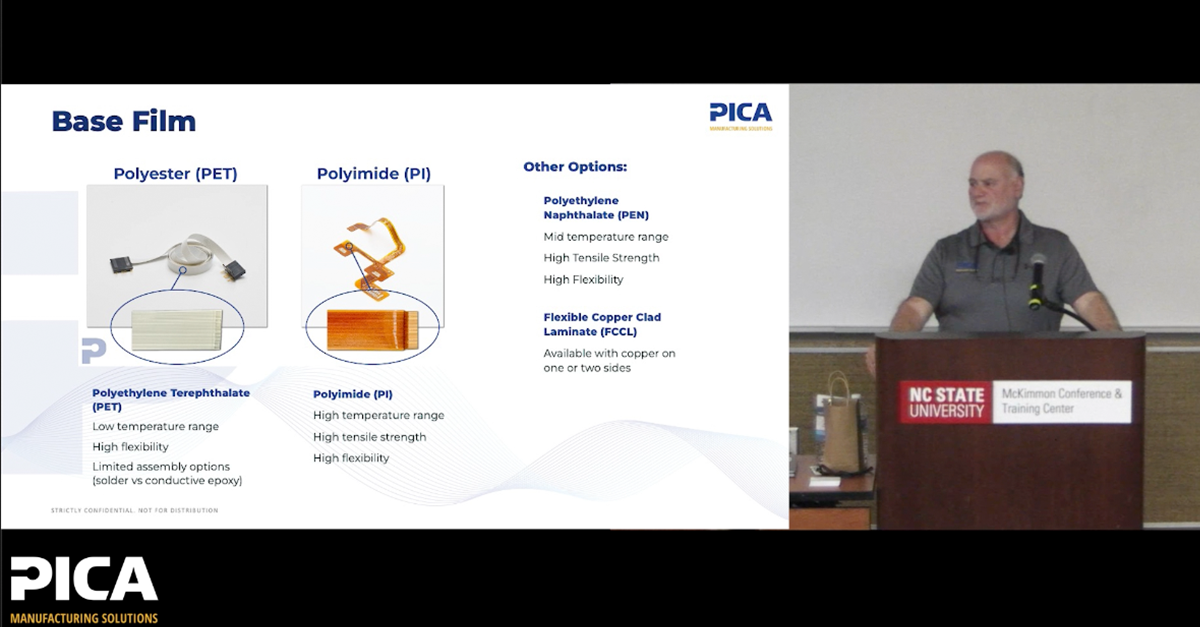
PCB Carolina 2024 brought together industry leaders to explore advancements in PCB design and manufacturing. Joe DiPalermo, our Director of Engineering, delivered an insightful presentation on the latest techniques and considerations for designing and producing flexible and rigid-flex circuits.
Joe DiPalermo, Director of Engineering at PICA, has been a cornerstone of the team for 22 years. With over 36 years of experience in the Flexible Printed Circuit (FPC) industry, Joe has excelled in diverse roles, including Prototype Engineering, Sales Engineering, Program Management, and Applications Engineering. His deep knowledge of flexible circuits and engineering innovation makes him an invaluable leader at PICA.
Here’s a comprehensive recap of the key takeaways from his session.
Flexible Circuit Configurations and Their Use Cases
Flexible Circuit Configurations: Single, Double, Multilayer, and Rigid-Flex Designs
Flexible circuits offer engineers lightweight, space-efficient, and versatile solutions for modern electronics. Joe highlighted the three main configurations and their applications:
1. Single-Sided Flex Circuits:
• Single conductive copper layer on a flexible substrate.
• Ideal for simple, low-cost designs where flexibility is required but minimal interconnects are needed.
2. Double-Sided Flex Circuits:
• Contain two conductive copper layers separated by a flexible dielectric layer.
• Allow for more complex routing and additional components, making them suitable for moderately complex designs.
3. Multilayer Flex Circuits:
• Combine three or more copper layers with flexible substrates and adhesive layers.
• Allow for more complexity and design flexibility, even in challenging, making them suitable for specialized applications.
4. Rigid-Flex Circuits:
• Integrate rigid and flexible layers into a single unit, reducing interconnects and improving signal integrity.
• Simplify assembly while offering both the durability of rigid boards and the adaptability of flex circuits.
• Widely used in compact, high-performance systems such as aerospace equipment,
medical devices, and
consumer electronics.
These configurations provide engineers with options tailored to the complexity and demands of their specific applications.
Material Innovation for Improved PCB Reliability
Material Selection: Optimizing Performance and Reliability
Selecting the right materials is critical for ensuring circuit durability, flexibility, and thermal stability. Joe broke down the key material categories and their unique properties:
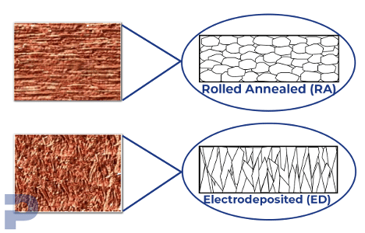
Base Films
1. Polyimide (PI):
• High tensile strength, thermal stability, and flexibility.
• Widely used in high-performance and dynamic applications.
2. Polyethylene Terephthalate (PET):• Cost-effective, with good flexibility but limited thermal resistance.
• Suitable for low-temperature or
roll-to-roll processes.
Advanced Flex Laminate Options (FCCL)
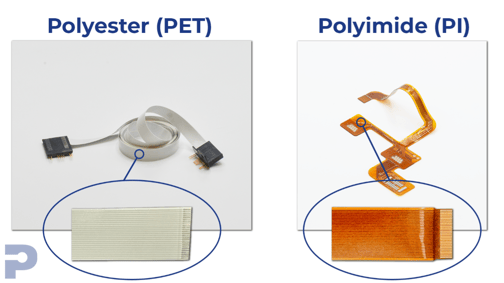
Flexible Copper Clad Laminates (FCCLs)
1. Adhesive-Based FCCL:• Uses an adhesive layer to bond copper to the substrate.
• Cost-effective and versatile but less flexible and thermally stable.
2. Adhesive-Less FCCL:
• Bonds copper directly to the base film, improving flexibility and heat resistance.
• Ideal for high-performance applications requiring thinner and more stable circuits.
Choosing the Right Copper for Your Application
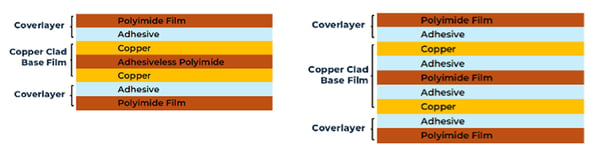
Copper Types
1. Rolled Annealed (RA) Copper:
• Excellent flexibility due to its grain direction, making it suitable for dynamic applications.
2. Electro Deposited (ED) Copper:• Cost-effective but less flexible, typically used in static or flex-to-install designs.
3. High Ductility Electro Deposited (HDED) Copper:
• More refined, equiaxial grain structure: Allows for greater deformation without cracking
Reinforcement Materials and Stiffeners
Stiffeners
1. Polyimide and Polyester Stiffeners:• Flexible and durable, typically 0.125 mm (0.005”) thick.
• Ideal for general reinforcement under mounted components.
2. Fiberglass Laminates (FR4, etc.):
• Provide high mechanical strength and thermal stability.
• Thickness ranges from 0.125 mm to 3.175 mm (0.005” to 0.125”), with FR4 offering flame retardancy.
3. Metal Stiffeners (Aluminum or Steel):
• Ideal for applications requiring specific bends or folds. Can also be used as a heatsink.
• These stiffeners can be as thin as 0.125 mm (0.005”).
4. Plastic Stiffeners:
• Provide lightweight reinforcement and can be custom-shaped for unique design needs, including 3D configurations. Can be “built in”.
Adhesive Technologies for Flex and Rigid-Flex
Adhesives
1. Modified Acrylics:• High-temperature resistance, suitable for soldering environments.
2. Modified Epoxies:
• Low thermal expansion and strong Z-axis stability, ideal for multilayer and rigid-flex designs.
3. Pressure-Sensitive Adhesives (PSA):
• Easy to apply, primarily used for bonding stiffeners or hardware.
4. Conductive Adhesives:
• Connect shielding layers or stiffeners for electrical or thermal conductivity
Best Practices for Next-Generation PCB Designs
Best Practices for Optimized PCB Design
Joe outlined several strategies to enhance the durability and performance of flexible and rigid-flex circuits:
1. Stress Management: Avoid routing traces directly above each other ("I-beam configurations") and use staggered copper traces to distribute mechanical stress. Incorporate strain relief features where needed.
2. Bend Radius Optimization: Adhering to calculated minimum bend radius—specific to the circuit type, application, and layer count—prevents damage and extends the circuit’s life.
3. Thermal Management: Utilizing copper’s thermal conductivity with thermal vias, heat sinks, or aluminum stiffeners ensures effective heat dissipation.
Key Engineering Takeaways
Key Takeaways for Engineers
Joe emphasized the importance of collaboration between engineers and manufacturers to ensure successful project outcomes. Engaging the flex manufacturer early in the design process and providing a clear understanding of the circuit's intended use are critical steps. Key recommendations included:
1. Material Specification: Clearly define material requirements, stack-ups, and key attributes (e.g., thermal resistance, flexibility, cost).
2. Stress and Environmental Factors: Address these considerations during design to avoid costly redesigns.
3. Balance of Cost and Performance: Optimize designs to ensure durability and functionality without exceeding budget constraints.
By integrating these principles, engineers can streamline development, enhance reliability, and meet the demands of modern, high-performance applications.
Conclusion — What This Means for Modern PCB Design
Joe DiPalermo’s presentation highlighted the growing importance of flexible and rigid-flex circuits in modern electronics. By leveraging advanced materials, innovative designs, and collaborative manufacturing approaches, engineers can redefine the limits of what’s possible.
For more resources on PCB design and manufacturing, visit picamfg.com to explore industry insights, material guides, and best practices that can take your projects to the next level.
 English